Contents
Introduction
Marketing is a tricky, ever-changing game. It can be challenging to predict what would perform best for your business while keeping up with the most recent trends. However, if we look at it methodically it is all about having a robust strategy and then implementing that strategy efficiently.
In this Review, we discuss the importance of strategizing in marketing and implementing those strategies to generate maximum output. So, whether you’re just starting in business or looking to strengthen your marketing plan, keep reading for the inside scoop.
Former CEO of Apple John Sculley once said,
“Marketing strategy is a series of integrated actions leading to a sustainable competitive advantage.”
And that’s what marketing is. What you need to learn here is what are these ‘integrated actions’ and how to implement those actions effectively.
Importance of Strategizing
Strategizing is essential in marketing because it enables businesses to identify their objectives, target market, and unique selling proposition. Here is why marketing strategy is crucial:
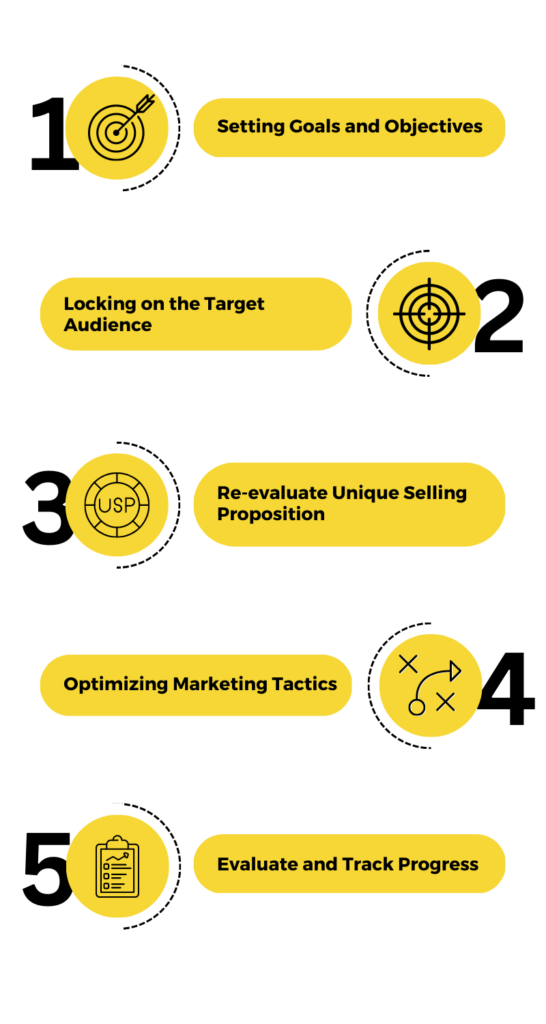
1. Setting goals and objectives
Businesses can better define their goals and objectives by using a marketing strategy. Businesses can more effectively target their marketing initiatives and track their success by defining their goals.
2. Locking on the target audience
A marketing strategy aids companies in determining their target market. Businesses can create more successful marketing campaigns by understanding the needs, wants, and behaviors of their target audience.
3. Re-evaluate unique selling proposition
Businesses can re-evaluate their unique selling proposition (USP) with the aid of a robust marketing strategy. Businesses can create messaging that connects with their target audience by determining what makes their product or service stand out from the competition. By running a feedback loop and getting feedback on marketing efforts, the USPs of the businesses can either be affirmed or re-evaluated.
4. Optimizing marketing tactics
A marketing strategy helps businesses in selecting the best marketing tactics to reach their target market. Businesses can concentrate their efforts on the tactics that are most likely to produce results by understanding their audience and their goals.
5. Evaluate and Track Progress
A marketing strategy offers a success road map. Businesses can stay on track and track their progress over time by outlining the steps that must be taken to accomplish their objectives.
But just having a marketing strategy is not enough. A strategy needs to be implemented, otherwise, it’s just a plan sitting duck on your desk. And it needs to be implemented well because a poorly executed strategy may not yield the expected results.
Strategy Implementation Checklist
Here are some recommendations for putting a marketing strategy into action effectively.
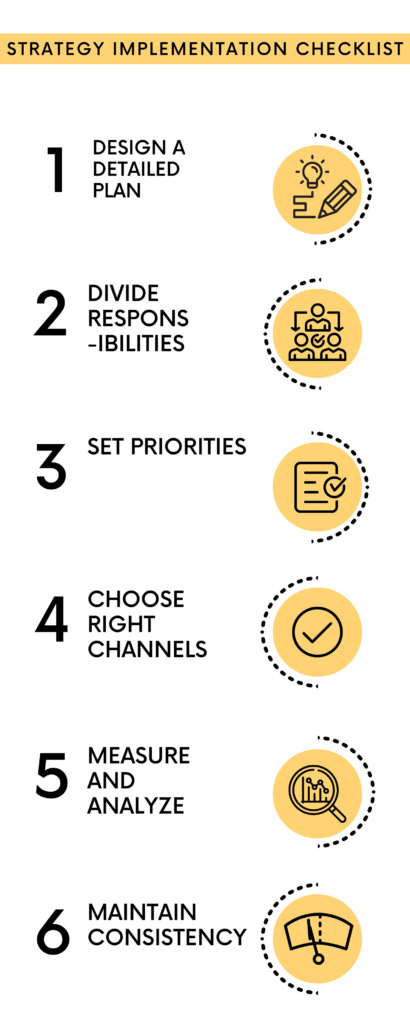
1. Design a detailed plan
Prepare a thorough plan outlining the precise steps you must take to accomplish your objectives before you start putting your marketing strategy into practice. Timelines, budgets, and metrics for measuring your progress should all be part of your plan.
2. Divide responsibilities
To make sure that everyone is aware of what needs to be done and when, assign specific team members or departments the responsibility for each action. By doing so, you’ll be able to avoid confusion and ensure there is accountability for each task.
3. Set priorities
Set tasks in order of importance and urgency. Prioritize the tasks that are the most important for achieving your goals.
4. Choose right channels
Choose the right channels to reach your target audience. The ideal channels for different sets of target audience may be completely different and need to be chosen accordingly.
For example: If you’re looking to target businesses, email or LinkedIn may be ideal. However, if you’re also looking to target young people (in the age group of 21-30), Instagram, or Snapchat would be better suited.
5. Measure and analyze
To find out what is working and what isn’t, regularly measure and analyze your marketing efforts. The best way is to create feedback loop(s) and utilize this knowledge to hone your strategy and make any necessary modifications.
Since marketing is a dynamic field, be flexible and open to new concepts that may be incorporated to
6. Maintain Consistency
The secret to successful marketing is consistency. To establish credibility with your audience and foster trust, be consistent with your vision, messaging, and branding.
Conclusion
In conclusion, strategizing is crucial to marketing but so is the implementation of the strategy.
By taking a scientific and strategic approach to marketing, you can achieve measurable and incremental results from your marketing efforts.
Let us know how you’re implementing your marketing strategy in our comment section.