

Contents
Introduction
Eat-sleep-work-repeat!
This is the mantra most people follow today. In the hustle and bustle of our daily lives, routines provide a structure that guides us through the day. While routines have without a doubt been successful in providing stability, excessive adherence to unwavering routines has been known to dampen our creativity.
Studies conducted to study the correlation between routine and creativity agree with Benedict Carey (author of the new book How We Learn) when he says,
“Our routines limit our brain’s ability to build skills and knowledge.”
However, we realized the truth behind these words when through continuous observations of our team’s functioning at Ikana, we noticed that routine though great in getting the tasks done was not the greatest in improving our overall creativity.
Here are some of our observations:
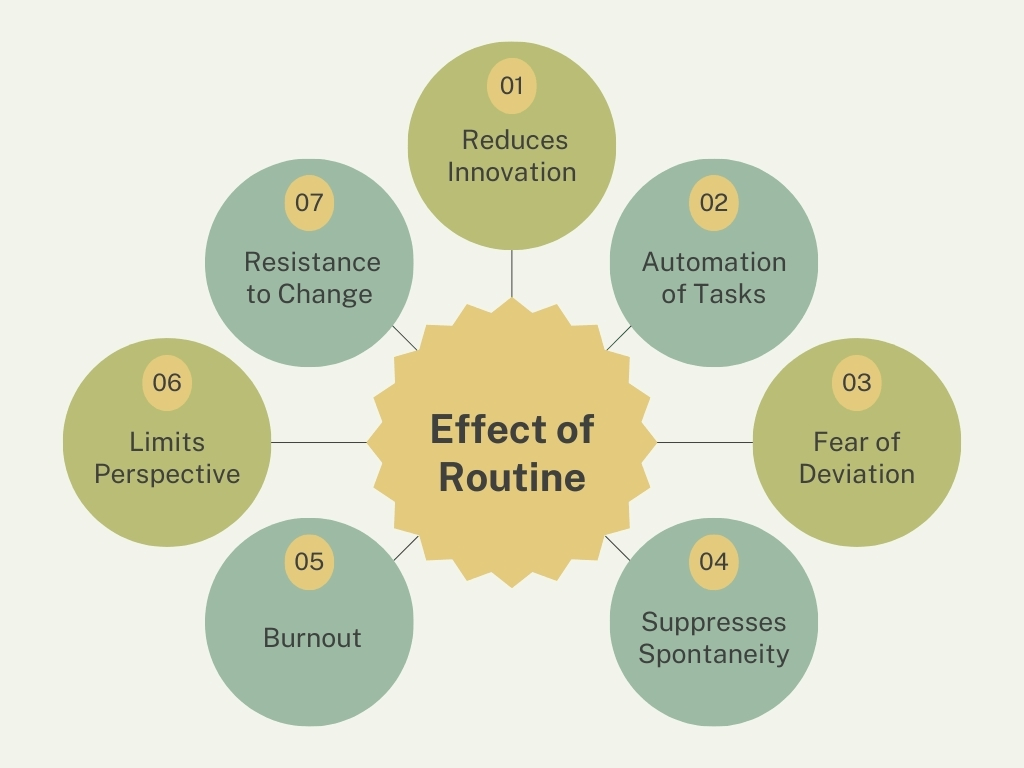
1. Routine reduces innovation:
A strict routine that involves doing the same tasks in the same manner repeatedly reduced our exposure to new ideas and experiences. It not only prevented us from seeking better ways of performing the tasks at hand but also killed the creative spark of the team. To combat this, we must recognize that every routine is a compromise on your creativity and actively seek ways to break the routine. This might involve tackling tasks in different orders or exploring alternative approaches to problem-solving.
2. Routine leads to automation of tasks:
Following routines ardently subsequently led us to start performing tasks without putting any conscious thought into our actions. The tasks which were at one time being performed brilliantly due to routine became more mechanical and mindless creating a disengagement from the task at hand which ultimately left less room for creativity and problem-solving. When we break the routine, we force our minds to engage more consciously with our work, leading to enhanced creativity and better outcomes.
3. Routine creates a fear of deviation:
Adherence to routines and established norms became counter-productive in the long run because it discouraged individuals from seeking new and better approaches to handling the problems at hand. We realized that creativity thrived in environments that encouraged experimentation and routines discouraged people from taking risks, as they were more comfortable in sticking to what was familiar. Understanding that every routine is a compromise on your creativity helps us embrace uncertainty and take calculated risks in our approach to work.
4. Routine suppresses spontaneity:
Creativity flourishes in non-restrictive environments. Being constrained by strict schedules and deadlines left little room or time for creative thinking which prevented spontaneous thinking and unconventional ideas. To break the routine effectively, we must create space for unexpected moments and unplanned creative breakthroughs.
5. Routine leads to burnout:
Routine though essential for keeping the work on track made the work monotonous and boring. Routine made people feel mentally exhausted and uninspired which in turn contributed to burnout, both physical and emotional. When we recognize that every routine is a compromise on your creativity, we can actively work to introduce variety into our daily tasks.
6. Routine limits perspective:
Routines can be like blinders on the eyes of a horse- though they help to focus on the end goal they create a narrow focus, limiting exposure to diverse perspectives and ideas. We noticed that creativity flourished when people were encouraged to open themselves up to a broad range of experiences and viewpoints. The key is to break the routine regularly to expose ourselves to new viewpoints and experiences.
7. Routine creates a resistance to change:
Routines when encouraged resulted in resistance to change. People become so comfortable and used to the routines that they become reluctant to embrace new ideas and find it hard to adapt to different circumstances. This resistance to change made it difficult for us to incorporate innovations in our work methods causing us to fall behind. To overcome this, we must actively break the routine and embrace new methodologies.
What needs to be done
Having understood the detrimental effects of over-conforming to routine on overall performance we realized that the best way to encourage and foster creativity was by breaking routine.
Here are some strategies that worked wonders for us:

1. Change in environment
A simple action like changing our work’s environment or location greatly impacted how we think and act. A change in surroundings helped trigger new thoughts and perspectives.
For instance, taking a meeting in a coffee house instead of our office helped get our creative juices flowing.
So, next time you are feeling stuck in a routine or facing a creative block just take a walk, go to a park, or simply spend some time in a place you don’t typically visit. Additional tips to break the routine:
- Rearrange your workspace weekly
- Try working from different locations
- Experiment with different work hours
- Create an inspiration wall that changes regularly
2. Focus on the “new”
We tried to engage in activities that were not a part of our daily routine. Enrolling in courses we had been curious about, picking up new hobbies, and attending workshops- basically learning something new stimulated our brains and pushed us to seek creative solutions for our problems. To break the routine effectively:
- Learn a new skill every month
- Tackle projects in unexpected ways
- Collaborate with different team members
- Challenge established processes
3. Exposure
We actively exposed ourselves to new ideas and experiences. Read books, watched documentaries on topics we knew little about, took short trips to explore new areas. Exposing ourselves to these diverse ideas, cultures, and environments inspired creative thinking. Remember that every routine is a compromise on your creativity, so seek out:
- Novel technological tools
- Different cultural experiences
- Diverse networking opportunities
- Various artistic influences
4. Creativity building exercises
Collaborating with others and trying methods like brainstorming sessions, mind mapping, etc. went a long way in boosting our creativity. Working with people from different backgrounds brought a fresh perspective to our work and made us think outside the box. Additional ways to break the routine:
- Creative thinking games
- Regular creativity workshops
- Cross-disciplinary projects
- Innovation challenges
5. Taking breaks
Breaks are important to prevent burnout, they enable us to move away from monotonous routines and visualize the bigger picture, thus giving us a chance to recalibrate our efforts to goal achievement. Regular breaks, short walks, or at times even short naps helped refresh our minds. Calming techniques like meditation put our minds at rest and create mental space for new ideas. You will be surprised at how many times the simple act of just taking a step back and clearing our minds lead to creative breakthroughs. Strategic ways to break the routine during breaks:
- Engage in quick creative exercises
- Try different meditation techniques
- Explore new lunch spots
- Practice various relaxation methods
6. Deliberate Disruption
Understanding that every routine is a compromise on your creativity, implement:
- Planned workflow disruptions
- Regular skill-sharing sessions
- Random creativity challenges
- Unconventional meeting formats
7. Creative Time Blocking
To effectively break the routine:
- Designate specific times for creative thinking
- Schedule “innovation hours”
- Plan for spontaneous creative sessions
- Allow flexible working hours
Conclusion
It is important to remember that routines in themselves are not detrimental to creativity. It is in fact the fixation on following routines mindlessly and ardently that creates a roadblock for the free flow of creativity.
The goal is not to do away with all routine but to introduce variety and novelty into your routine to stimulate your mind and encourage creative thinking. The key is to strike a balance between routine and flexibility, between creating a foundational structure with routines and then taking a step back to introduce new elements by breaking away from the set routine. Understanding that every routine is a compromise on your creativity is crucial for professional growth. The art lies in knowing when to break the routine strategically. While some routine provides necessary structure, regular disruption of these patterns can lead to extraordinary creative breakthroughs.
The goal is to create a dynamic balance where we can maintain productive workflows while ensuring enough flexibility to break the routine when needed. This approach helps maintain both efficiency and creativity, allowing for structured progress while fostering innovation.
Have you noticed how routines have impacted your creativity?
Every time you break the routine, you open new pathways for creative thinking and innovation. The key is to make these breaks intentional and purposeful, rather than random and disruptive. We would love to hear your experiences in the comment section below.