Contents

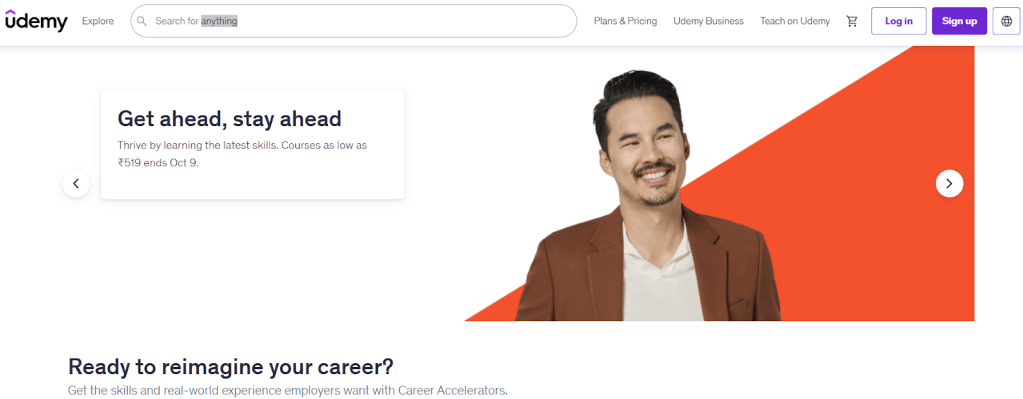
Udemy is a global learning marketplace where independent instructors publish video courses and learners enroll on demand. You can either buy a single course with lifetime access or subscribe to a catalog that rotates and grows over time. For companies, Udemy also offers a business platform with analytics, SSO, and integrations so teams can upskill at scale. The draw is choice and flexibility. There are hundreds of thousands of courses across tech, business, design, and personal development, and you learn at your own pace from a phone or laptop.
Pricing
1. Buy individual courses
You pay once and get lifetime access to that course. Udemy offers frequent promotions, and eligible purchases are covered by a 30-day refund window.
2. Personal Plan subscription
A monthly or annual Personal Plan gives access to a curated catalog of top-rated courses with coding exercises and practice tests. The price can vary by region and promotion, and Udemy notes it may run limited-time offers. A U.S. landing page shows $35 per month after trial as an example, but your local price may differ. Cancel any time.
3. Udemy Business
For teams, Udemy sells annual per-user licenses with access to 13,000+ top courses, certification prep, analytics, and integrations. Public pages show example pricing like €28 per user per month billed annually for the Team plan, and an India page listing ₹24,000 per license per year. Enterprise tiers and Pro add-ons include labs, workspaces, and assessments. Pricing varies by location and plan.
Refunds
Most marketplace course purchases are refundable within 30 days if they meet policy guidelines. Some refunds may be issued as credits.
How Udemy works
1. Pick a path. Either subscribe to the Personal Plan for a rotating catalog, or buy specific courses for lifetime access.
2. Learn on any device. Watch video lessons, practice with quizzes, coding exercises, or practice tests where supported. Download selected content for offline learning on mobile.
3. Track progress. Resume where you left off and use Q&A or assignments when instructors enable them.
4. For teams. Admins assign learning paths, monitor adoption, and benchmark skill trends with dashboards and integrations.
Features of Udemy
1) Two access models
Udemy is flexible. Buy once for lifetime access, or subscribe to learn across many topics with one monthly fee. This lets you go deep on a single skill or sample broadly without big upfront commitments.
2) Massive and current catalog
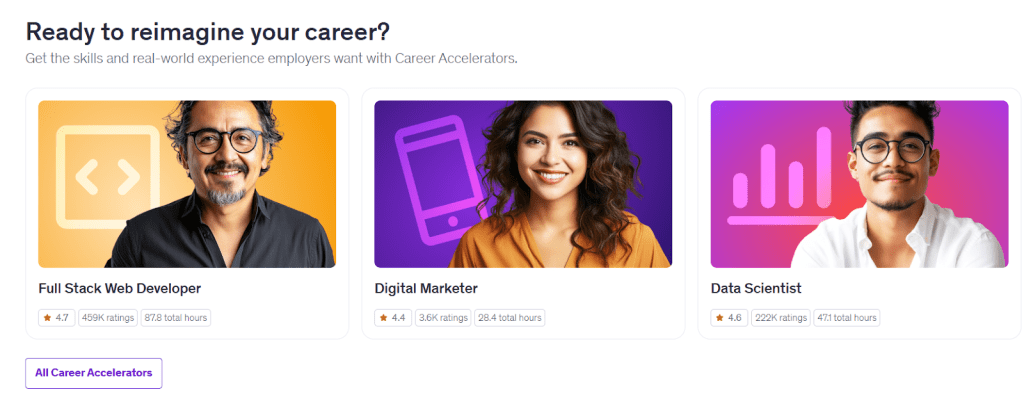
Udemy highlights 250,000+ courses on the marketplace and a curated subset for subscriptions and business. Because instructors publish continuously, you can usually find current topics such as GenAI, cloud, security, or framework updates. The business catalog features 13,000+ top courses and certification prep for 200+ exams.
3) Learning tools beyond video
Many courses include practice tests, coding exercises, and assignments. Udemy Business Pro layers on hands-on labs and workspaces for tech teams and offers Pathways to structure learning goals.
4) Mobile apps with offline mode
The Android and iOS apps support downloading lectures or full courses for offline viewing. You can also adjust download settings to manage data usage.
5) Organization-ready features
Udemy Business supports single sign-on, LMS and Slack integrations, user analytics, adoption reports, and benchmarking so leaders can see what skills teams are building.

Security and privacy
Udemy’s Trust Center and Security FAQ describe controls such as TLS 1.2+ for data in transit, 256-bit ciphers for data at rest, restricted production access, and logical separation of customer data. Udemy hosts services in U.S. data centers with industry-standard physical protections. Legal pages also note encrypted backups and governance via data processing terms. As always, your use is covered by Udemy’s Terms of Use and Privacy Policy.
Pros and Cons of Udemy
Pros
1. Flexible ways to learn. Buy once with lifetime access or subscribe for ongoing learning.
2. Huge selection with recent topics and a curated set for subscriptions and business, including certification prep.
3. Mobile offline support for learning on commutes and flights.
4. Business-grade features like SSO, LMS integrations, analytics, and labs for teams.
5. 30-day refunds on eligible marketplace purchases reduce risk for individual buyers.
Cons
1. Quality varies by course because anyone can publish. The fix is to check ratings, recent updates, and preview lectures before buying or subscribing.
2. Catalog differences. The marketplace is larger than the subscription catalog, so a course you want might require a one-time purchase.
3. Business pricing is annual and per user. That is normal for B2B learning platforms, but still a budget consideration for small teams.
What to expect from Udemy
Expect a self-paced video learning experience with practical exercises when instructors provide them. Most popular topics have many competing courses. You will likely try a few intros before settling on the instructor style you prefer. If you subscribe, plan your month around two or three focused outcomes so you use the catalog well. Teams should assign learning paths and measure adoption with built-in analytics.
Alternatives to Udemy
1. Coursera
Coursera partners with universities and major companies to offer university-style courses, Specializations, and Professional Certificates. Coursera Plus gives access to most of the catalog with monthly or annual pricing and a free trial, and business plans are available for teams. If you want academic credentials from brand-name institutions, Coursera is strong. Udemy is better when you want a wider range of practitioner-led courses, more variety in teaching styles, and rapid coverage of fast-moving skills across many price points.
2. LinkedIn Learning
LinkedIn Learning focuses on professional skills and ties certificates to your LinkedIn profile. It is streamlined and curated. Udemy is better for sheer course volume and instructor diversity, and for the mix of marketplace purchases plus subscription options that let you choose between lifetime ownership and monthly access. =
3. Udacity
Udacity offers Nanodegree programs with structured projects, mentor feedback, and career support. Prices are higher, and plans are usually monthly with bundle discounts. Udemy is better if you want lower-cost entry and a larger selection for quick upskilling, while Udacity suits learners who want intensive, project-heavy programs at a premium.
IBR’s review
If your goal is practical, job-ready skills delivered in short, on-demand courses, Udemy is a good fit. The mix of one-time course purchases and a subscription catalog gives you control over cost and depth. The mobile apps and offline mode make it easy to keep a learning streak alive, and the 30-day refund policy on eligible purchases reduces risk when trying a new instructor. Quality varies across the marketplace, so make use of previews, ratings, and last-updated dates to choose well. For teams, the analytics, integrations, and labs in Udemy Business make rollout and measurement straightforward.
Ease of Use: 4.6/5
Features: 4.5/5
Template Quality and Exports: 4.5/5
Pricing and Flexibility: 4.7/5
Overall: 4.6/5
Conclusion
Udemy succeeds at what most learners want today. It is easy to start, affordable to experiment, and broad enough to cover nearly any job skill you care about. People tend to like Udemy for its range and accessibility, and we recommend it for individual learners who value choice and for teams that need measurable, scalable upskilling. If you prefer university credentials or fully guided programs, consider Coursera or Udacity, but for fast and flexible skill building, Udemy delivers.
Run a course business or a learning product. Ikana Business Solutions can help you grow with a focused GTM plan, SEO content that ranks, and conversion-ready pages that turn visitors into learners. We translate features into real outcomes and build campaigns that compound over time.
Start here → ikana.io