
The alarm has been sounded!
Once again!
With Covid-19-induced growth not keeping up, even Big Tech companies are preparing for challenging times to come. Following layoffs by mammoth tech firms including Twitter, Amazon, Meta, Snap, and Microsoft, successful tech startups are also announcing intentions to conduct firing that could affect thousands of employees. But there’s always a silver lining (for entrepreneurs).
The dreadful layoffs provide a unique learning opportunity into scaling your business sustainably.
Let’s use Twitter as a use case.
The Booming Business Trap
Let’s face it: laying off the workforce is a nightmare for any entrepreneur.
Following the news of layoffs at Twitter, its ex-CEO Jack Dorsey issued a heartfelt statement:

Businesses, especially startups, often fall into the vicious “Booming Business Trap” where increasing opportunities in the marketplace result in unexpected and non-strategic expansion of resources and expenses-leading to growth models that are unsustainable in the long-run.

The current layoffs are also a result of this phenomenon.
COVID-19 propelled tech businesses to new heights. Companies hired heavily in anticipation of rapid growth and many of these resources were engaged at a disproportionately high price. Fear of recession is now forcing companies to cut costs by terminating underperforming projects and firing surplus expensive resources.
What can we Learn from this?
Laying off staff simply means the company is not generating enough revenue to maintain its current scale of business.
Let’s revisit the statement made by Twitter ex-CEO, Jack Dorsey:
I own the responsibility for why everyone is in this situation: I grew the company size too quickly. I apologize for that.
Every entrepreneur wants to grow but that growth needs to be balanced. In the investment-fueled market today, entrepreneurs are lured to expand too quickly without setting up essential processes and systems to keep affairs optimized.
The Solution: Keep things Lean
The main goal of lean methodology is to continuously improve processes across the board to eliminate waste and deliver optimized value. Being lean ensures responsible decision-making in the service of creating customer value.
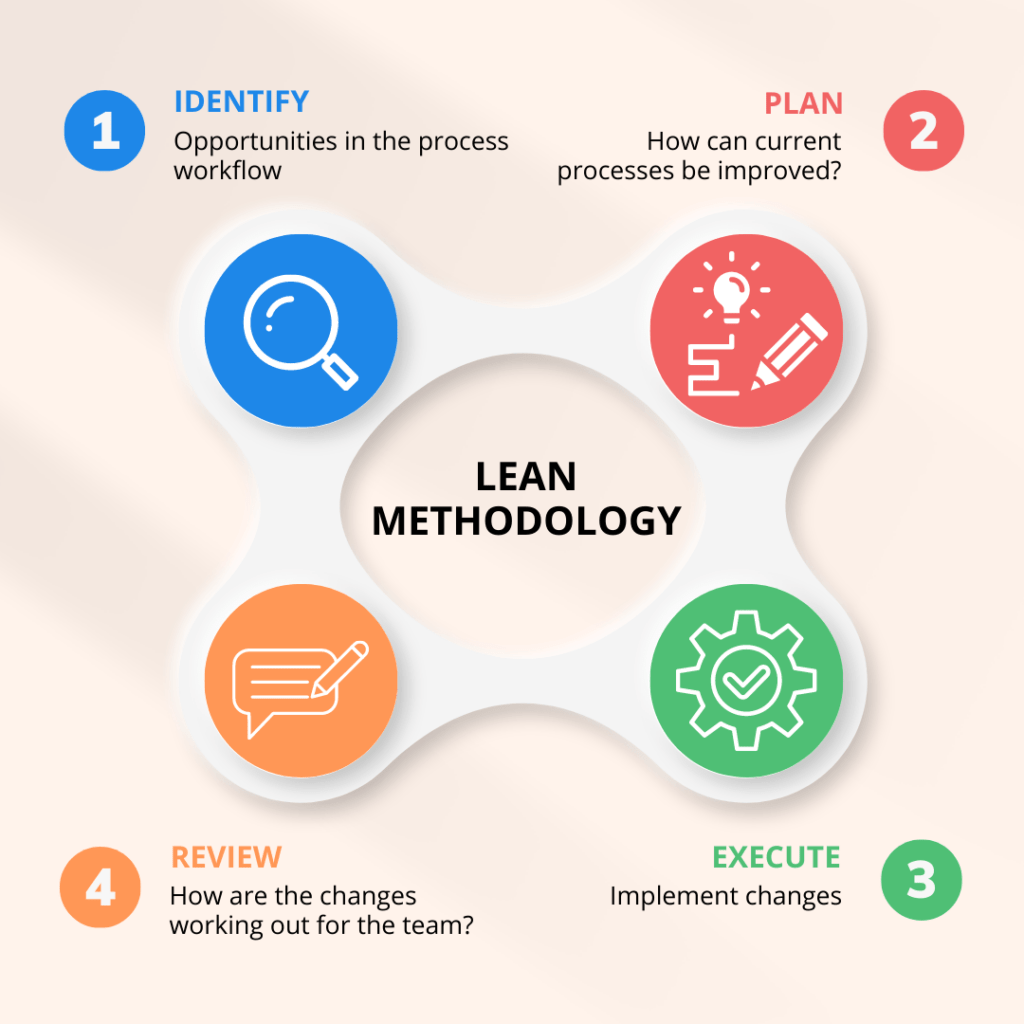
No matter the size of your venture, lean methodology calls for continuous improvement while reducing costs and adding to profits.
Here’s how you can implement the Lean methodology in your business:
1. A Reasonable Workforce
An important aspect of lean methodology is employing an optimum number of people. Hiring more than you need often leaves individuals without work and may even promote a lethargic attitude towards work.
It is important to take a step back and reassess existing positions and the need for it. This is not to eliminate positions, but to help the company survive.
Another tip is cross-training your employees so that they can help each other out in times of need. This also ensures everyone is working as a team.
2. Continuous Improvement
Continuous improvement is a basic tenet of the Lean methodology. The introduction of feedback loops can become a game changer in ensuring sustainable business growth.
Feedback loops provide an opportunity to evaluate the effectiveness of current action and immediate intervention, if necessary.
This increases the portion of effective contribution from each employee while saving the resources of the company. This helps leaders optimize operations and the workforce.
3. Customer is the Apple of your Eye
The customer’s perspective is the starting point for the lean methodology. Inefficient practices can be identified by assessing how users interact with your business, how quickly you respond to user issues, and how satisfied users are with the result. As a result, interactions with customers ought to increase to identify and eliminate unproductive practices.
Conclusion – It’s all about the People
People are prioritized in a lean organizational culture, which engages and empowers everyone inside the organization. They may then rapidly, effectively, and cooperatively produce value.
At the end of the day, a company is just a bunch of people working together.
Let us know your thoughts about the recent layoffs in the comments below.