Accounting: The Unsung Hero of Business
Whenever we talk about business, the discussion is usually skewed toward sales, marketing, or even human resource management. Though important, all these aspects often overshadow the ancient driving force of any business.
And we bet you can’t guess what it is.
It’s the mighty accounting.
Lawrence Summers, former U.S. Treasury Secretary and Chief Economist of the World Bank put it rightly:
“If you look at the history of the American capital market, there is probably no innovation more important than the idea of generally accepted accountancy principles.”
Accounting is the unsung hero of the business world. Even for small businesses where advanced tech tools are either irrelevant or unaffordable, accounting is the saviour that helps in making strategic business decisions. But the benefits of accounting don’t end here, and we shed light on top reasons for you to invest your time, effort, and money in accounting practices.
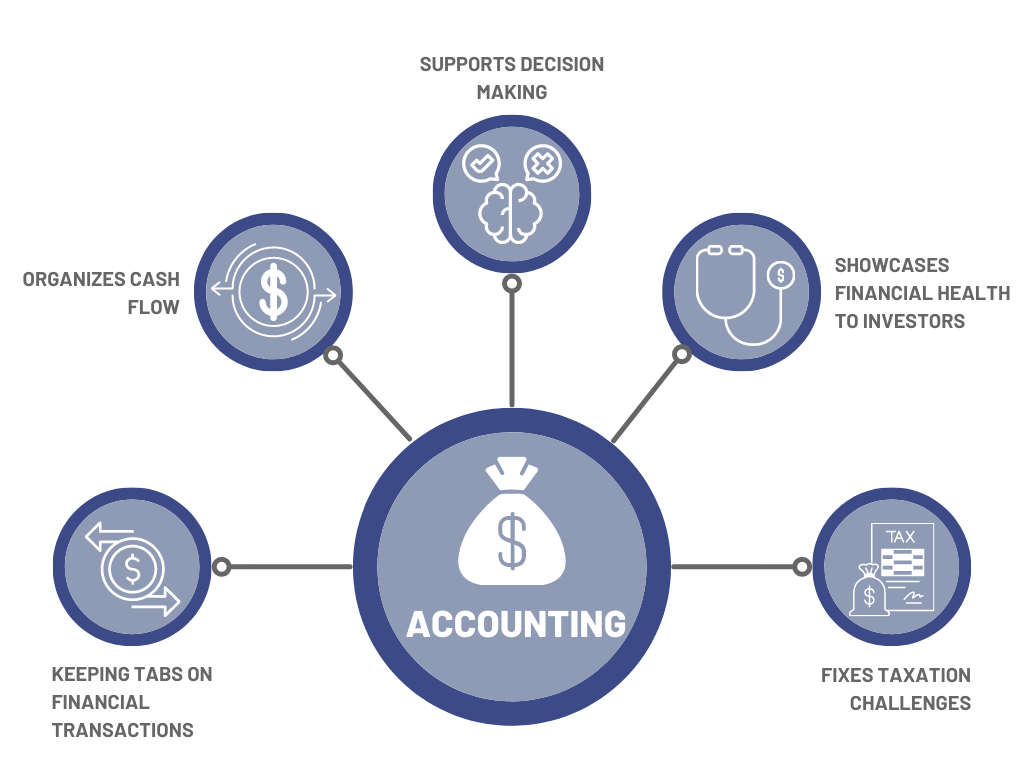
Keeps Tabs on Financial Transactions
The most basic function of accounting is recording a company’s financial transactions. This is crucial because it maintains an organized, up-to-date record of the company’s financial data, allowing business owners to compare current data with past data to audit the situation and identify trends.
It allows people in a company to review a company’s performance over time with complete, consistent, and accurate records. Effective accounting enables you to analyze and evaluate a company’s performance over time.
Organizes Cash Flow
It can be surprisingly simple to lose sight of how much money is coming in and where exactly it is being spent. Without an estimate of the cash flow, business owners are likely to make poor financial decisions, which may have far-reaching effects.
Without accounting, it’s hard to determine your spending capacity, how much you should invest, which debts haven’t been paid, and so on. Accounting provides a means to lessen the mental strain of business owners by providing control of cash flow. If you employ cumulative accounting, you are aware of the exact amount of your accounts payable and accounts receivable.
Supports Decision Making
Accounting is very crucial for an organization’s decision-makers. These include those responsible for the organization’s planning, administration, and management. Accounting is required by teams while making critical choices.
Business decisions can range from selecting whether to expand geographically to enhancing operational efficiency through strategic technological interventions. To make such decisions, you must consult data, specifically, your accounting records. Accounting can assist you in making judgments that will help you avoid common company pitfalls such as overspending, underspending, or stagnating.
Showcases Financial Health to Investors
A company seeking funding needs to be very well aware of the present financial records and projections before approaching investors. Lenders use this information to study the health of the business and decide if it is worth the risk of lending money. Accounting records empower investors to estimate how well their investment is capable of performing.
A company communicates its financial health and builds credibility by presenting accurate and reliable financial accounting reports. The three major external financial statements—the income statement, balance sheet, and cash flow statement—need to be prepared regularly and accurately. This ensures that investors and lenders have consistent and dependable access to information about margins, liquidity, cash flow, leverage, and overall financial status, based on which investors make their decision.
Fixes Taxation Challenges
State laws and regulations differ, but using the right accounting procedures and systems will help you make sure your company is operating inside the law. Accounting ensures that liabilities like sales tax, income tax, corporate tax, and excise tax, to name a few, are dealt with effectively.
Gathering financial data is the first step in filing your tax return. Financial statements inform you about exactly how much you owe at any given time and enable effective planning for the future. Since taxation is a significant liability that can negatively impact cash flow, it is very important to know how much you owe and ensure you have the funds to pay it by the due date.
During audits, accounting documents are extremely necessary to demonstrate that you have the relevant accounting information to back up your return.
To Conclude
Experienced business owners are well aware of the benefits of accounting, but often budding entrepreneurs take it for granted and risk putting their businesses in jeopardy.
We hope this Review serves as a reminder that accounting is the most effective way to assess the health of a business, keep a tab on cash inflow-outflow, manage funds, and most importantly take the best financial decisions.
Let us know your experiences in developing accounting best practices in the comments below.