Why Am I Obsessed With LinkedIn Games?
Introduction
Alright, I’m going to confess something: I’m officially addicted to LinkedIn games.
Yes, you heard that right—LinkedIn, the platform we all thought was just for career stuff, has me hooked with its new casual games.
I didn’t think LinkedIn could compete with my social media or gaming apps, but here I am, procrastinating on real work by playing Queens, Pinpoint, and CrossClimb.
And honestly, I’m kind of loving it.
Why Am I Obsessed With LinkedIn Games?
I initially thought the idea of games on LinkedIn sounded like a bad joke. I mean, this is the place where you polish your professional persona, not play games, right?
But LinkedIn’s new games have managed to blend productivity and fun, and now I’m spiraling into a weird addiction I didn’t see coming.
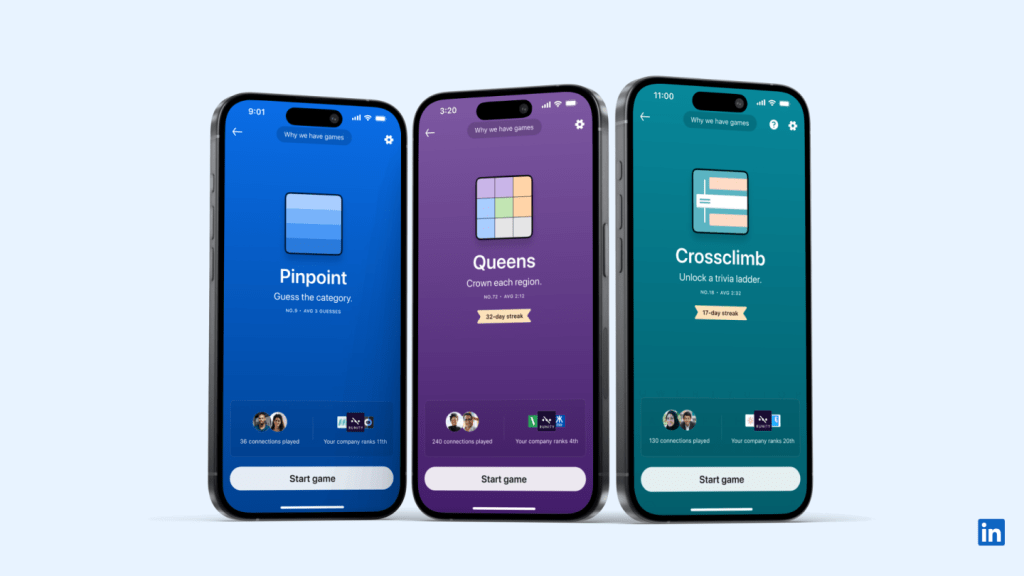
- Queens
This game is a brainy twist on chess, where players must place queens on a chessboard without them attacking one another. It’s designed to challenge users’ strategic thinking—a skill highly prized in leadership roles. Queens not only sharpens problem-solving skills but offers a friendly way to compete with peers or even potential employers. Imagine challenging a recruiter to a match after a networking event—it could make for a memorable connection!
- Pinpoint
Pinpoint, a classic “spot the difference” game, tests attention to detail—a skill essential in professions ranging from engineering to editing. By gamifying this task, LinkedIn provides a low-pressure, fun way to engage while practicing critical skills. Moreover, it encourages users to focus on small details, making it ideal for industries where precision matters.
- CrossClimb
CrossClimb challenges players to form words by connecting dots on a climbing wall. It’s all about quick thinking and agility, which are great metaphors for navigating fast-paced professional environments. This game subtly reinforces the importance of staying sharp in dynamic situations—much like how one needs to navigate a rapidly changing job market or workplace.
But Is This Really What LinkedIn Should Be Doing?
Honestly, I’m torn.
On the one hand, I love these games, and I know I’m not the only one. These casual challenges let me take a break from scrolling through endless corporate jargon and actually enjoy my time on the platform.
LinkedIn, a site once known for being too serious, is finally lightening up.
I mean, who knew playing chess on a career platform could be my new form of “networking”?
But then the pragmatic side of me kicks in.
Is this really how we want to engage with LinkedIn?
A part of me feels like the platform is drifting away from its professional roots.
Are we diluting LinkedIn’s core value by turning it into a place for games? What happens when a recruiter wants to connect, but I’m too busy strategizing my next move on Queens?
What’s the Point of LinkedIn Games Anyway?
I can’t deny LinkedIn’s strategy here is clever.
It’s gamifying professional engagement, making us want to spend more time on the platform.
They’ve clearly taken notes from other platforms like Duolingo or Fitbit, which use gamification to keep users coming back for more.
But LinkedIn is also treading into unfamiliar waters: Can games really foster professional relationships?
Here’s the thing: Games like Pinpoint or CrossClimb do more than just kill time—they subtly encourage brain training, attention to detail, and problem-solving, skills that are actually valuable in the workplace.
So maybe LinkedIn’s onto something here. Maybe they’re just giving us a new way to build those soft skills we usually struggle to demonstrate on a resume.
And networking?
Let’s be honest: Ice-breaking on LinkedIn can be awkward as hell.
Playing a quick round of chess or spotting differences in images might be a much easier way to get a conversation started than the classic, “Hey, I see we have mutual connections. Let’s chat.”
But Could LinkedIn Overdo It?
Of course, like anything addictive, there’s a danger here. LinkedIn could easily go overboard with the games, turning what should be professional development into pure distraction.
What happens when instead of updating my profile or messaging connections, I’m hyper-focused on beating my high score in Queens?
LinkedIn is still supposed to be a platform for career advancement, after all, and it needs to find that balance between fun and function.
We’ve seen platforms like Foursquare, once gamified with check-ins and badges, lose their edge because they leaned too heavily into the gaming aspect. LinkedIn could face the same fate if games start taking center stage over actual career-building content.
Lessons for Other Startups: Gamification Done Right
For startups watching LinkedIn’s move, the key takeaway here is about balance.
Gamification works wonders for engagement when it’s done right—but only if it complements the product’s core purpose.
Fun and productivity can coexist—just don’t forget why people came to your platform in the first place.
Here are some good real-life examples:
Duolingo
Duolingo’s success stems from its game-like learning environment. It uses streaks, points, and badges to make learning new languages fun and engaging.
LinkedIn is aiming for a similar approach, using short, interactive games to motivate users to engage with the platform more frequently.
The critical takeaway for LinkedIn is to keep games brief and goal-oriented, so users leave with a sense of accomplishment rather than distraction.
Fitbit’s Step Challenges
Fitbit successfully turned physical activity into a competition, encouraging users to hit step goals by comparing themselves to friends. In a similar vein, LinkedIn’s games like CrossClimb tap into users’ competitive spirit, pushing them to “level up” professionally.
The lesson here is that competition—done in moderation—can foster both engagement and productivity, but it should align with the platform’s core mission.
Salesforce’s Trailhead
Salesforce has gamified its entire training system with Trailhead, where users earn badges and certifications as they learn how to use Salesforce products. This has not only increased engagement but also significantly boosted professional development within their ecosystem.
LinkedIn could follow this blueprint by tying game achievements into actual skill assessments, allowing users to earn certifications or badges that enhance their professional profiles.
3 Tips for Gamifying your Business
For any startup willing to dip into the gamification, keep the following tips in mind:
Tip #1: Micro-Engagements, Not Time Drains
The brilliance of LinkedIn’s games (and why I keep playing) lies in their brevity. They’re easy to start, but they don’t demand hours of attention. Startups need to think about micro-engagements that get users coming back without eating up too much time.
Tip #2: Stay True to Your Brand
If LinkedIn started introducing candy-crush-like games, it’d be a disaster. The games still fit within LinkedIn’s professional tone, even if they’re fun. The lesson here is clear: Don’t lose sight of your core brand in the rush to add more engagement features.
Final Thoughts: Am I Mad About LinkedIn Games?
Am I still addicted to LinkedIn games? Absolutely. Do I feel guilty about it? Eh, a little. But honestly, I’m enjoying the fact that LinkedIn finally feels human. It’s not just about career bragging or endless messages from recruiters anymore—it’s about having a little fun while staying sharp.
If LinkedIn keeps things in moderation, I think the games could actually be a game-changer (pun intended) for how we network and interact online. But if they take it too far? Well, then we might all just end up playing chess while our resumes collect dust.
Here’s hoping LinkedIn can keep the fun without losing focus—because for now, I’m all in on CrossClimb.